
The Real Estate Freelancer: An Entrepreneurial Adventure of Freedom and Professionalism
Discover the unique experience of freelance real estate strategy consultant Stéphanie Hansford, and her perspective on the future of freelancing in real estate. Explore how freelancers bring essential expertise and confidentiality to corporate projects while ensuring agility and competitiveness.
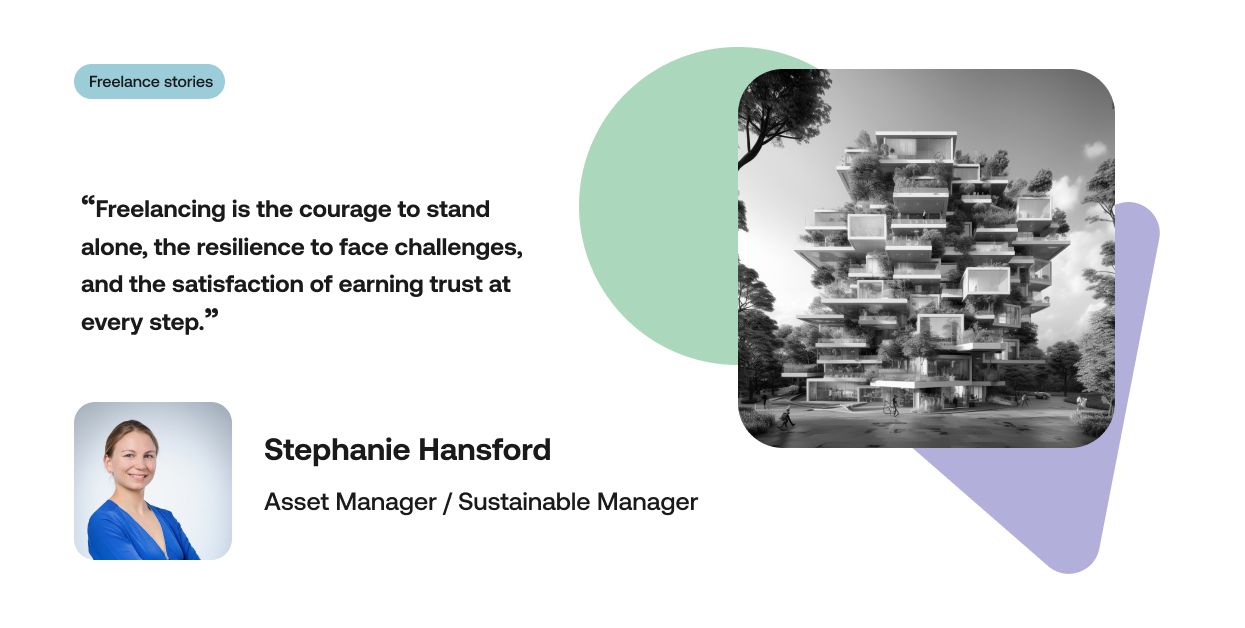
In this exclusive interview, we meet Stéphanie Hansford, a seasoned Asset Manager in real estate who recently embraced the freelance world to follow her passion.
With over fifteen years of experience in renowned companies, Stéphanie has specialized in asset management with a particular focus on the residential sector.
Her impressive career has seen her lead ambitious projects, but her desire for greater agility and independence ultimately inspired her to launch her own business.
Stéphanie isn’t just driven by profitability; what truly motivates her is the essence of places, their needs, and untapped potential. She envisions ways to create lasting value through ecological, social, and environmental transition—always guided by deep respect for and attentive listening to her clients' needs.
Here is her Momi Interview:
What do you think about working in real estate as a freelancer after a few months?
Freelancing is, above all, an entrepreneurial adventure. You choose to go solo, but that doesn’t mean you can’t gradually build your own business. I actually use the Momi platform in both directions—both to look for missions and to find freelance talent when a company I work with needs a specific skill.
It’s a real professional milestone, where you build things step by step. You face many challenges and discoveries: your forecasts, your finances, your expenses, your clients, your business development, your core expertise, and everything around it—partners, stakeholders… and above all, solitude. In your office, in your thoughts… it takes resilience and trust in what you’re doing.
And yet, it’s a freedom I don’t regret—something I truly needed at a point in life when personal circumstances led me to rethink the meaning of work and daily structure. It’s not necessarily the ultimate answer to work-life balance—it depends on your mindset and how you operate.
I gain confidence with every milestone reached, every mission signed, every client won—it’s incredibly rewarding.
What qualities do freelancers bring?
I believe freelancers are deeply attentive to their clients and the market, and they’re not afraid to keep learning—training that’s chosen, not imposed. That changes everything. They’re exposed to a variety of clients, which enriches their mindset, work methods, and subject matters. They deal with diverse challenges, personalities, and workflows, and they bring agility, clarity, and a much-needed strategic perspective to companies.
They offer genuine professional expertise, earned and reinforced through real-world experience. Over time, this grows into a strategic vision and advisory role that businesses truly value.
For companies, it’s a powerful complement to their internal setup. Freelancers can confirm a strategy, challenge it, re-energize a project, speed things up, unlock blocked solutions—or simply help absorb temporary surges in activity.
How do you ensure confidentiality in corporate projects?
Freelancers are professionals who take full responsibility for their commitments—this is the foundation of their professionalism and credibility. Confidentiality is a core part of this commitment and a key factor in building their reputation, just like any established company.
Of course, company cultures, experiences, and use cases can influence each other—and that’s a good thing. A good employee also looks around, observes, and learns from peers.
Today, the fear of competition seems less important than the value of shared knowledge and skills, especially when it comes to addressing the major challenges of our time.
And what about freelance Asset Management—how’s that working out?
Why not?
At the end of the day, I’m a real estate strategy consultant. I challenge the methods and vision of the in-house teams in a shifting environment, so the collaboration is often constructive and enjoyable.
Naturally, companies appreciate my residential experience—it’s a less common and highly sought-after specialty. I bring that expertise as a complement to existing teams, sometimes even training or supporting them.
I’ve also led teams and projects extensively in previous roles, which allows me to step into strategic initiatives or join a team with a horizontal management approach.
This flexibility is a real advantage for companies. Depending on the project’s topic, they can "pick" the right skill set to fulfill the mission. Except for ongoing fund management, asset management is primarily project-based. For short- to medium-term needs, calling on freelancers offers agility, speed, and competitiveness. For long-term projects that only require part-time involvement, freelancers are also a great fit.
In other areas, it’s all about collaboration. I support implementation, roll out action plans, or help co-create them.
I’ve also taken the initiative to train in ESG and low-carbon topics to better guide our activities. I bring those convictions into my work and can help design and implement ESG strategies at the operational level—or even build a real estate strategy aligned with sustainable finance.